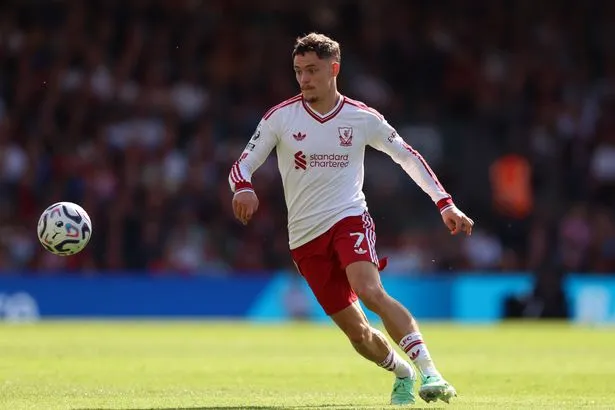
The number does something to people. The moment a transfer fee crosses the nine-figure mark, a player stops being a human being settling into a new country, a new league, a new system, and becomes instead a walking receipt that needs to justify itself every single Saturday. Florian Wirtz is the latest to feel the full weight of that expectation, and right now, by most accounts, he is struggling under it.
Jamie Carragher has been the loudest voice in the room, calling Wirtz's performance in Liverpool's 1-0 win at Bournemouth one of the poorest he has shown since joining from Bayer Leverkusen. Carragher went further, demanding Liverpool drop the German for the upcoming Manchester City fixture after the international break. It is the kind of verdict that lands hard. But is it the right one?
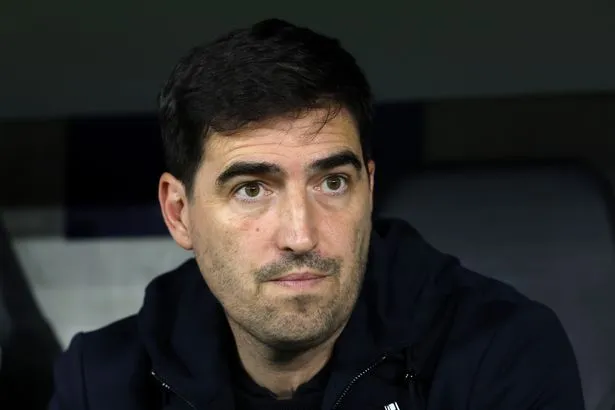
Context matters, even when the price tag makes it inconvenient. The Andoni Iraola era is just seven matches old. Liverpool are a club still reshaping their identity, moving away from a style built on wide goals and attacking full-backs towards one centred on a number ten operating off a number nine. That is not a transition that happens in a handful of fixtures, and Wirtz has been asked to lead that change while also getting used to a new country, a new dressing room, and the aftermath of losing the manager who brought him to the club.
What makes the discourse particularly frustrating is the selective reading of the evidence. Wirtz and Alexander Isak have started just ten Premier League matches together, and Liverpool have lost only one of them. It was Wirtz making a nuisance of himself at the near post at Bournemouth that created the space for Isak to score the only goal of the match. Before that, when Isak was absent, Wirtz forged a productive partnership with Hugo Ekitike that was cut short only by injury. None of that absolves the lack of end product. But it complicates the story.
The consensus across those who have studied Wirtz most closely this season is broadly the same: the criticism is warranted, but the response should be patience with conditions attached. Selling him is nonsense. He has only just turned 23 and, crucially for his longevity, his game is not built on pace. He could have well over a decade at the top. Nobody serious is suggesting Liverpool cut their losses after less than a full season.
The more nuanced argument is whether he should be a guaranteed starter every week. There are those who feel Dominik Szoboszlai might offer more solidity in certain fixtures, and that managing Wirtz's minutes, rather than nailing his name to the teamsheet regardless of form or opponent, could actually help him. Treating him as just one of the squad rather than an untouchable £116m asset might be exactly what he needs. The goals and assists numbers are not good enough, that much is clear. But Wirtz remains Liverpool's most creative presence in central areas, and the players running off him need to do their part too. When he has the ball, his teammates need to move. That is a two-way street that has not always functioned as it should.
The realistic picture is this: Liverpool will keep playing Wirtz, because you do not make that kind of investment and abandon it after a difficult opening chapter. But a deadline of sorts is forming. His long-term future at the club is likely to be assessed at the end of this season, and between now and then he needs to turn the promise and the pretty patterns into goals, assists, and moments that make opposition defenders genuinely nervous. The raw material is there. The platform, in time, should be too. Whether Wirtz can put it all together before patience runs out entirely is the question that will define Liverpool's next twelve months.
Inspired by reporting from Ian Doyle, Mark Wakefield, Stephen Killen, Matthew Abbott, Kieran King, Patrick Austen-Hardy, Mark Jones, Liverpool Echo.
Read the original report →Kop Insider always credits original journalism. We report independently. Facts inform us, words are our own.
This report was written automatically from the journalism credited above. Andy Anfield is Kop Insider’s automated reporter, not a member of staff.