How the Salah succession plan set everything in motion
When Mohamed Salah confirmed he was leaving back in March, Liverpool at least had one thing in their favour: time. Knowing a player of that magnitude, 257 goals, third on the club's all-time scoring list, top scorer in eight of nine seasons, was walking out the door meant there could be no scrambling around in a panic come June. The planning had to be serious, and it had to start immediately.
In truth, the foundations had already been laid the previous summer, when Hugo Ekitike, Florian Wirtz and Alexander Isak arrived for a combined £320m. That trio was always the Salah succession blueprint, even while the great man himself was still pulling on the red shirt. But once his departure was confirmed, the internal thinking crystallised: Isak, a British-record signing at £125m from Newcastle United, would carry the primary goalscoring burden. The problem was that someone still needed to do what Salah did on that right side, and finding that someone proved to be anything but straightforward.
The Diomande pursuit that got away, and the Barcola pivot that followed
Sporting director Richard Hughes had his man earmarked early doors. Yan Diomande, the 19-year-old Ivory Coast international, was identified as a star-in-the-making capable of unlocking Isak and injecting genuine quality on the right. Liverpool made their interest in the RB Leipzig winger crystal clear, communicating a willingness to pay up to £86m. It was serious money for a teenager, and it reflected just how highly he was rated inside Anfield.
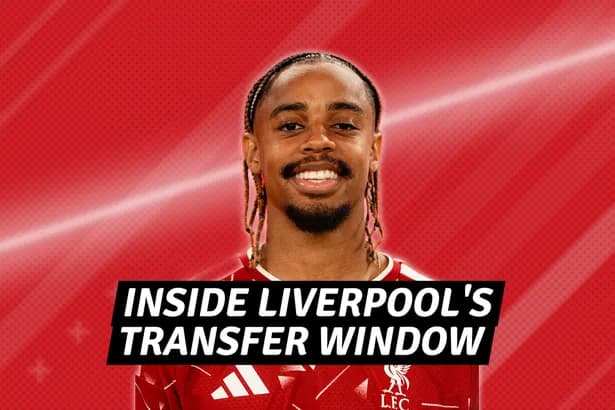
But Liverpool were not alone in that assessment. Paris Saint-Germain came in hard, and despite Diomande publicly playing down their European pedigree as a factor while representing Ivory Coast at the World Cup, it was PSG who won the race. That setback forced a rethink, and Hughes pivoted towards Bradley Barcola, also at PSG, with the logic being that Diomande's arrival in Paris might loosen the French club's grip on the former Lyon man. Real Madrid's sudden interest complicated the picture further, threatening to harden PSG's resolve. What ultimately tilted it Liverpool's way was Barcola himself. He made it plain he had no interest in signing a new deal at Parc des Princes, and that moving to the 20-time champions of England was exactly where he wanted to be. That clarity of intent ended any lingering interest from Arsenal and handed Liverpool the leverage they needed.
The nuts and bolts of a £123m deal and a midfield gamble taken
PSG did not make it easy. An opening demand of £140m for a player they had been trying to tie down to fresh terms told you everything about how reluctant they were to sell. Weeks of negotiations followed, involving FSG president Mike Gordon and PSG's Qatari chairman Nasser Al-Khealifi in direct club-to-club talks, before a breakthrough was eventually reached at £123m, a fee that makes Barcola the second most expensive signing in Liverpool's history, behind only Isak.
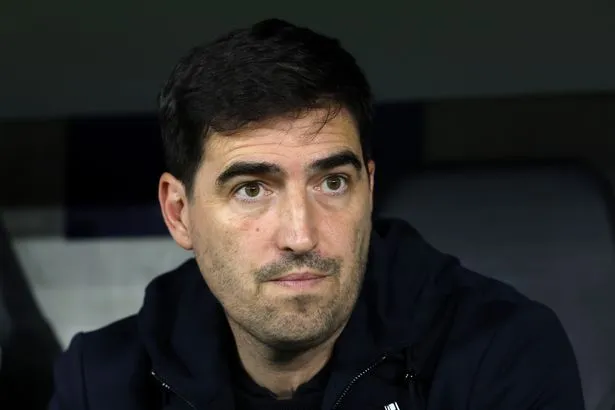
While all of that was playing out, Iraola was also getting to work closer to home. Early conversations with Liverpool's recruitment team led the new head coach to assess Victor Munoz of Osasuna, and his £34.5m release clause was triggered roughly a fortnight after Iraola took over from Arne Slot. Liverpool moved quickly to beat off competition, most notably from Newcastle United, to secure the Spain international at what is, in today's market, a relatively modest outlay.
A frontline to excite, but the right-wing question lingers
On paper, the attacking options Iraola now has at his disposal are genuinely mouth-watering. Barcola and Wirtz as the chief creators, Ekitike to come back into the mix, and Isak as the focal point, that is a front line capable of frightening most defences in Europe. But there is an honest conversation to be had about whether the Salah-shaped hole on the right has actually been filled, and it is hard to argue convincingly that it has.
Iraola wants his wingers to operate on both flanks, and there is a tactical logic to that unpredictability. But asking a £123m player to regularly perform outside his most natural position feels counterproductive, and it places significant responsibility on the likes of Rio Ngumoha, Cody Gakpo and Munoz to develop into credible right-side options. Brighton's Yankuba Minteh was near the top of the wish list all summer, but two bids, the higher of which reached £60m, were knocked back by the Seagulls. A deal looked briefly possible in the final days, but when it was decided that Gakpo would not be permitted to join Manchester City in an £85m move, Liverpool chose not to return to the table for Minteh either. Add in the £60m capture of Jeremy Jacquet in January, and you can see the scale of investment made in the wide areas over the past 12 months, even if the right-wing position remains an open question heading into the new campaign.
How Iraola solves that puzzle across the coming months will define whether this window is remembered as a masterstroke or a work in progress.
Inspired by reporting from Paul Gorst, Liverpool Echo.
Read the original report →Kop Insider always credits original journalism. We report independently. Facts inform us, words are our own.
This report was written automatically from the journalism credited above. Andy Anfield is Kop Insider’s automated reporter, not a member of staff.