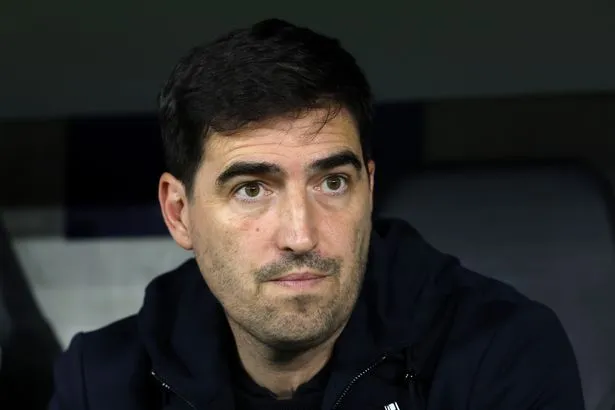
The elephant in the room at Anfield
Manchester City arrive at Anfield on Sunday carrying more baggage than they have in years. The independent commission's verdict landed last week, guilty on all charges of financial misconduct, and suddenly the story of a seamless post-Guardiola transition under Enzo Maresca has been swallowed whole by the chaos unfolding off the pitch. Whatever you make of the football, there is no ignoring what that ruling means for everything City have built over the past decade.
To their credit, results on the pitch have done the talking for Maresca's side heading into this fixture. An unbeaten start across all competitions had silenced the predictable chatter about a drop-off following the departure of the man who shaped the club in his image. It's a situation Liverpool supporters know something about, Arne Slot walked into similarly sceptical surroundings before winning 11 of his first 12 matches and eventually lifting the Premier League title in his debut campaign. Transitions can work. City's has, broadly, worked. But Sunday at Anfield is a different test entirely.
What Maresca's City actually look like
Maresca was chosen, in no small part, because of his similarities to his predecessor. He worked under the Catalan as assistant during the treble-winning 2022/23 season, and the DNA shows, positional discipline, overloads in the attacking third, full-backs inverting to give midfielders licence to push on. At City, that role often falls to Matheus Nunes, converted to right-back by Guardiola after arriving from Wolves as a midfielder, whose inverted positioning creates room for new signing Enzo Fernandez. Centre-back Marc Guehi is also comfortable stepping into midfield, while Josko Gvardiol and Nico O'Reilly offer similar flexibility on the left.
One of the clearest tactical shifts from last season is how often City are crossing the ball. Last term, both City and Liverpool averaged 4.4 crosses per 90 minutes. This season, City are up to 5.2, more than all but three sides in the league. O'Reilly and Phil Foden have each averaged 1.64 successful crosses per 90, which tells you exactly how Maresca wants to feed Erling Haaland. The Norwegian wins 52.9% of his aerial duels this season, and even when City don't reach him directly, those deliveries create knock-downs for Rayan Cherki, who stays tight to Haaland in a front-two shape, to feed on.
In terms of the ball, City are doing what City do. They average 63.1% possession this season, a 2.6% increase on last term, and their expected goals and big chances created per 90 have both ticked upward. The slight dip in touches inside the opposition box compared to last season suggests a marginally more direct edge to the final third, but this is still a side built around suffocating opponents with the ball.
Where Liverpool can hurt them
The good news for Andoni Iraola's side is that the aerial threat City are leaning into may be the one area Liverpool are best equipped to deal with. The arrivals of Jeremy Jacquet and Ronald Araujo have given the Reds genuine physicality at the back, both carry aerial win rates above 72% in the league this season, while Virgil van Dijk continues to operate at an elite level in that department at 71.4%. If City's primary delivery mechanism is crosses into Haaland, Liverpool's defensive profile this season suggests they should be able to cope with most of what comes their way.
The greater worry is Cherki. The Frenchman is the joint-third top scorer in the league with three goals and has created more chances for City than anyone else at the club this season, with 12 to his name. Iraola's centre-backs pressing man-to-man means one of Jacquet or Araujo will likely be assigned to stop Cherki before he can turn, though if the No. 10 drops into deeper areas to evade that press, he could drag a centre-back out of position and leave space in behind for the likes of Antoine Semenyo or Iliman Ndiaye to run into. Liverpool's midfield will need to be switched on to stop that service from arriving in the first place.
The numbers that give Liverpool genuine hope
For all the surface-level slickness, City's defensive numbers deserve scrutiny. In terms of expected goals against, they rank only ninth in the league, having conceded the chances to allow an average of 1.4 expected goals per match. Liverpool, by contrast, rank third with 1.2. That gap is not enormous, but it reinforces what the eye test has hinted at across the early weeks of the season: Maresca's side have had things their own way, but they have not been tested the way Anfield will test them on Sunday.
There is a version of City that shows up here and keeps the ball, grinds out the chances and makes you work for every moment of quality. There is also a version that, under the weight of an extraordinary week off the pitch and a crowd that will be absolutely rocking, shows some of the cracks that the underlying numbers already hint at. Liverpool's job is to make sure it's the second version that turns up, and the tools are there to do exactly that.
Inspired by reporting from Morgan King, Liverpool Echo.
Read the original report →Kop Insider always credits original journalism. We report independently. Facts inform us, words are our own.
This report was written automatically from the journalism credited above. Andy Anfield is Kop Insider’s automated reporter, not a member of staff.