The incident that changed everything
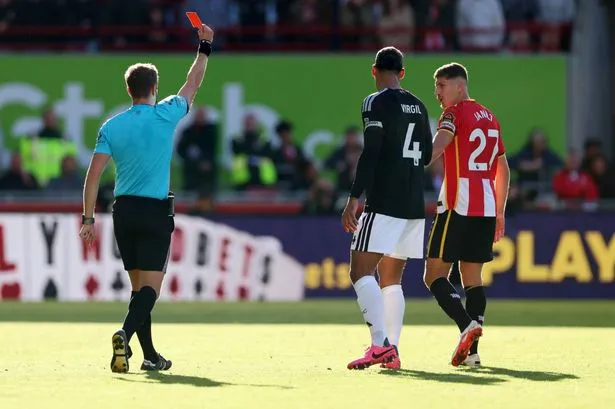
For a moment that lasted less than a second, Yehor Yarmoliuk's afternoon against Liverpool generated more debate than the goals that followed it. The Brentford midfielder was shown a straight red card after VAR reviewed what referee John Brooks described as a headbutting action towards Liverpool's Jeremy Jacquet, and the fallout from that decision has refused to go quiet.
The incident itself unfolded before a corner, the two players tussling in the box before Yarmoliuk moved his head towards Jacquet. Brooks had initially missed it, but VAR brought it back to his attention. Once he visited the monitor, the red card was out. The Premier League Match Centre confirmed the ruling simply enough: "After VAR review, the referee issued a red card to Yarmoliuk for violent conduct." Brooks himself was equally direct: "After review, the Brentford No.6 commits a headbutting action. The final decision is a red card."
What the new angles actually show
A fresh wave of discussion has emerged off the back of alternative camera angles circulating since the match. Some supporters and observers latched onto the theory that Ronald Araujo had pushed into Yarmoliuk from behind, effectively triggering the incident. On a surface level, one particular angle seemed to give that argument some weight.
The problem is that the angle is misleading. Wider footage shows Araujo was nowhere near the midfielder at the point of contact, and the cameras positioned behind the goal, the very ones used by VAR to make the call, confirm there was no push from behind. What appeared to show contact was simply foreshortening, a well-known visual distortion where players deeper in the frame look considerably closer to an incident than they actually are. In that sense, the officials appear to have made the right call on the facts in front of them. Whether the action itself warranted a red card is an entirely separate argument, and one that is harder to settle.
Iraola's scepticism and what it means
Brentford manager Andoni Iraola did not hide his uncertainty at the post-match press conference. Far from angry, he seemed genuinely conflicted, telling reporters: "I think it's a hard one. I have to say it. I've seen it in the screen, in the play I looked, but I don't know. What do you think? I don't know. I'm not sure if it was or not."
That kind of measured ambiguity from a manager is actually more damaging to the officials than outright fury. He is not claiming a conspiracy, simply saying he cannot be sure the threshold for violent conduct was met. And in a season where the interpretation of headbutting motions has been far from consistent across the Premier League, that scepticism is not unreasonable.
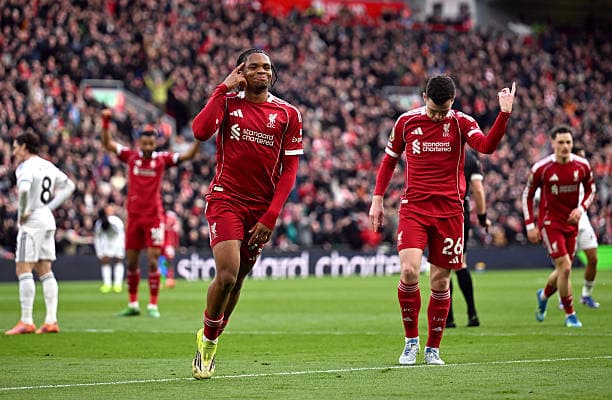
What is clear is how pivotal that dismissal was. Brentford led 1-0 through Keane Lewis-Potter's header when Yarmoliuk walked, and had looked reasonably comfortable at that point. Playing the entire second half with ten men was a different proposition entirely, and strikes from Victor Munoz and Alexander Isak eventually turned the match around for Liverpool, with a second dismissal, this time for Vitaly Janelt, arriving in added time to seal three points.
What's next for Liverpool
The result keeps Liverpool moving, even if the manner of it will keep analysts busy for a while yet. The officiating controversy has clouded what was ultimately an important win during an inconsistent start to the campaign. With Champions League action against Villarreal and a significant Premier League fixture against high-flying Brighton both arriving this week, there is no room to dwell on the noise.
Inspired by reporting from Amie Wilson, Luke Thrower, Liverpool Echo.
Read the original report →Kop Insider always credits original journalism. We report independently. Facts inform us, words are our own.
This report was written automatically from the journalism credited above. Andy Anfield is Kop Insider’s automated reporter, not a member of staff.