The question has been asked often enough in whispered tones. Now, with Trent Alexander-Arnold back on English soil for international duty and his struggles at Real Madrid there for all to see, it deserves a proper answer. And that answer, stripped of sentiment or bitterness, is this: if Liverpool get the chance to bring him back, they should take it without a second thought.
Former England manager Sam Allardyce put it bluntly this week. "If he is going to be a Real Madrid player then this season he needs to be playing more than ever," Allardyce said. "If not, he should come back to the Premier League, Liverpool could do with him back." Big Sam is not always a man you rush to quote on matters of footballing nuance, but on this occasion he is difficult to argue with. Alexander-Arnold is 27, has started the majority of Madrid's matches from the bench under Jose Mourinho, and missed out on the summer's World Cup after being left out of Thomas Tuchel's squad. That is a brutal run of events for a player who was, not so long ago, considered among the most influential footballers in European football.
The backlash he received from Liverpool supporters when he left on a free transfer in May 2025 was real, and understandable. You do not walk away from your boyhood club without consequence. But football has a short memory when talent is involved, and a few trademark passes threading through a packed defence tend to heal a great many wounds remarkably quickly.
It is only 16 months since Real Madrid announced his signing, and yet the Reds have spent most of that period visibly feeling the gap he left behind. The right-back role became a revolving door under Arne Slot last season, a constant source of instability in a position that Alexander-Arnold had turned into something close to a tactical superweapon. The attempts to build a new system around that vacancy have faltered, derailed by injuries, inconsistency, and a near-constant churn of personnel.
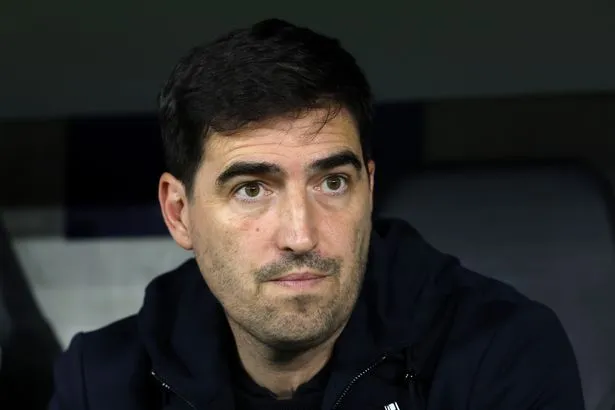
Conor Bradley, the most obvious homegrown solution, is still working his way back from a serious knee injury. In the meantime, head coach Andoni Iraola has turned to Ronald Araujo, a centre-back by trade, to fill the position. Araujo has been one of Iraola's more impressive performers in 2026/27, but using a central defender at right-back is a short-term fix built on pragmatism, not ambition. Iraola's current priority is clearly solidity and compactness, and Araujo serves that purpose. But Liverpool cannot play that way forever, and when the time comes to be more expansive, a specialist in that role becomes essential rather than merely desirable.
The creative void is visible in other ways too. Dominik Szoboszlai has been deployed in positions where he can replicate some of Alexander-Arnold's ball-playing from deep, and it works in flashes. But it is a compromise that removes a major goalscoring threat from central areas just to paper over a structural weakness. That is not a sustainable solution.
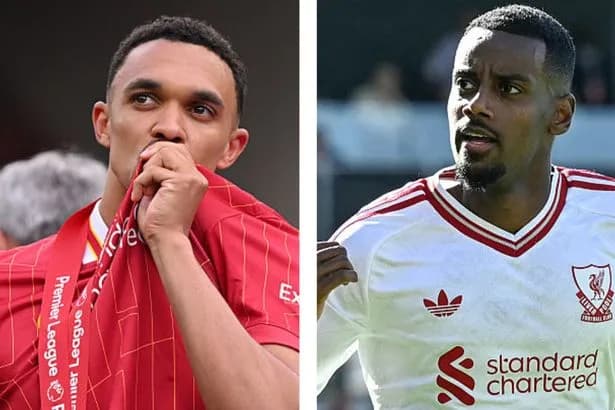
There is another dimension to this conversation that does not get discussed enough, and it is a straightforward one. Alexander-Arnold's delivery and creativity from the right side would be an extraordinary asset for any striker to have behind him. The prospect of him whipping crosses in for Alexander Isak to feed off is not fantasy football, it is the kind of combination that writes itself into highlight reels and league tables. Isak, operating as Liverpool's focal point in attack, would benefit enormously from a right-back who can function as a secondary playmaker and a genuine creator of chances.
Yes, questions about his defensive contribution have followed him throughout his career, and they followed him to Madrid too. But the argument has always been the same: what he offers at the other end of the pitch more than compensates for the occasional lapse at the back. That calculus has not changed.
Almost certainly this remains in the realm of the hypothetical. The fee would need to be right. The wages would need to work. And Alexander-Arnold himself would need to decide that returning to Merseyside, after the manner of his exit, was something he wanted to pursue. None of those conditions are simple.
But the footballing logic is airtight. Liverpool have not replaced him. His replacement at Madrid has not gone to plan. His ability to dictate play from deep remains, in the words of those who work closest with the game, almost unmatched at his level. As Iraola looks to find consistency and creativity in a squad still searching for its identity, the Scouser who built his entire football life at Anfield before leaving for the Bernabeu might yet have one more chapter to write in red. Whether both sides are willing to turn that page remains the only question worth asking.
Inspired by reporting from Paul Wheelock, Ian Doyle, Theo Squires, Mark Jones, Liverpool Echo.
Read the original report →Kop Insider always credits original journalism. We report independently. Facts inform us, words are our own.
This report was written automatically from the journalism credited above. Andy Anfield is Kop Insider’s automated reporter, not a member of staff.